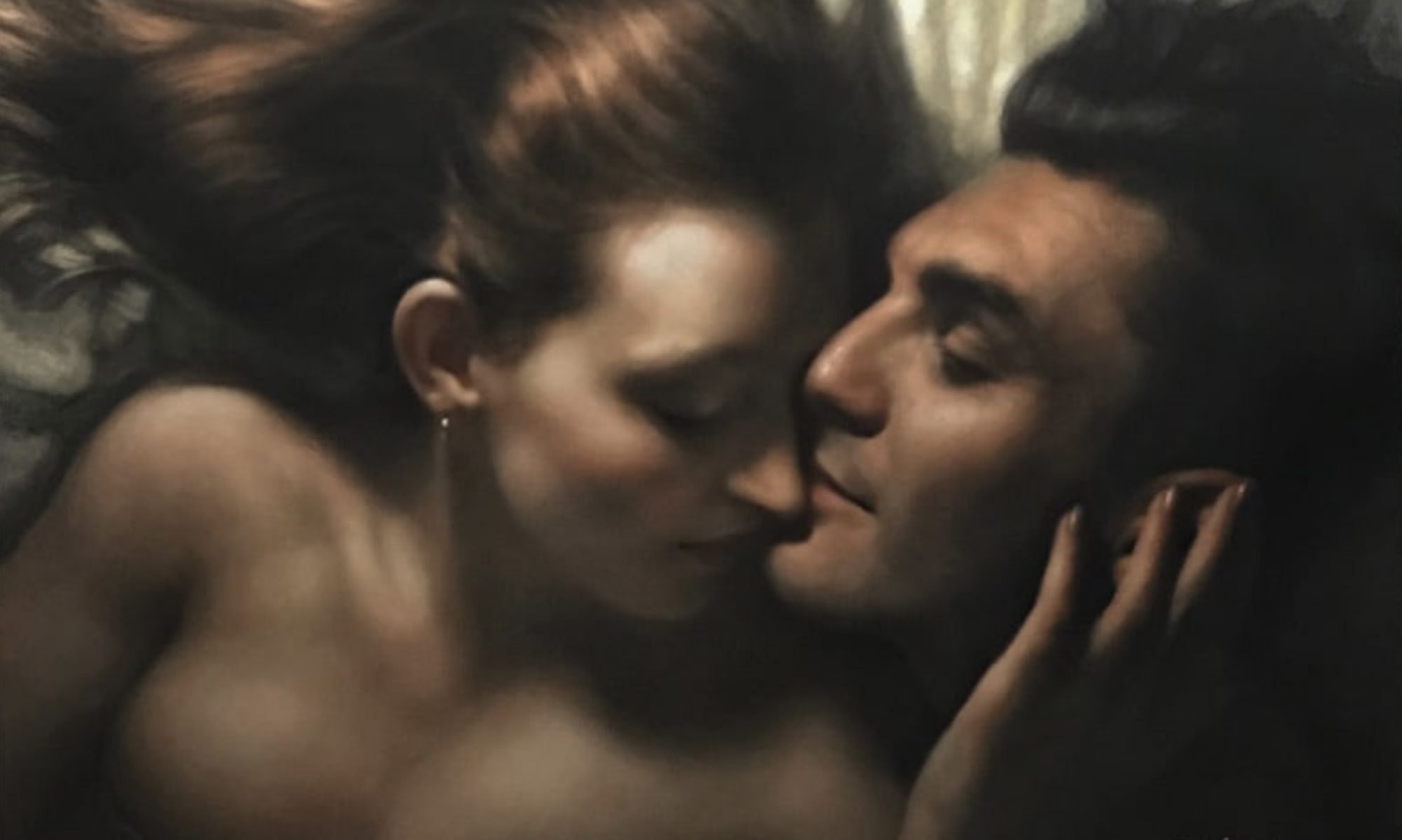


Michael Newberry (b. 1956, La Jolla, California) is an artist whose lifelong aim is to be the greatest artist he can be. Everything he creates is dedicated to that. Over five and a half decades working full-time, he has made more than 1,500 pieces, self-funded, uncompromised, and sold over a million dollars’ worth of work worldwide. He is currently executing the most ambitious project of his career: the Space Series, a monumental cycle of twenty-four paintings, nineteen completed so far, each 64×48 inches, depicting primordial gods and goddesses against nebula backgrounds.
Formation
Age 9 — World-class tennis coach. Newberry began tennis lessons under Lester Stofan, a three-time world tennis champion. In each lesson Stofan calmly identified one or two weaknesses, and with very simple suggestions turned those weaknesses into strengths. In tennis every mistake and success is owned by the individual, they can’t fake or hide anything. This would become a life long practice for Newberry’s independent art practice.
Age 10 — “You will always float through life.” Seeing another kid do an art project because he forgot his math book, Newberry threw away his math book so he could do art instead. When his teacher warned that he would “always float through life,” Newberry viewed the remark with scorn, comparing her lack of insight to the wisdom of his world-class tennis coach. He would not comply with uninformed dictates. This led to a lifelong practice of self-improvement and accepting advice only from colleagues who understood the context and could contribute to his vision.
Age 11 — Rembrandt. Newberry fell in love with Rembrandt’s work at eleven, describing it as the most intense experience of his life, surpassing even lovemaking. Realistically calling it a feeling of exaltation, that became the standard, the aim, and the why for Newberry’s art making.
Age 17 — Fine Art, Philosophy, and Tennis. At USC, Newberry was on a full-time tennis scholarship under coach George Toley, who guided USC to ten NCAA championships— Newberry was honored to be on the roster of the 1976 NCAA winning team. Newberry was also a USC fine art major, having the privilege of studying with Edgar Ewing, a modernist, who was a master of spatial depth. For electives he took philosophy classes such as Pre-Socratic Thought under Professor Kevin Robb. Encountering the earliest Western philosophers, those asking the most fundamental questions about existence.
Age 19 — Total clarity of vocation. Both tennis and art were competing for a primary commitment. Facing that choice, Newberry chose art as the primary driver. He quit USC with its tennis scholarship and moved to Holland to study art. But rather than abandoning tennis entirely, he used it as a funding mechanism: nine months of painting per year, the other 3 months were for professional tennis in Holland’s First Division, where he competed against and defeated players ranked in the top 80 of world rankings. This paid for several years of living and art studying expenses. For two years his art studies were intense, 9 months a year of painting and drawing live models 9 hours a day. This perceptual self-directed immersion became the foundation for Newberry’s unique style of art making
Age 19 — Ayn Rand absorbed and critically evaluated. Newberry read Atlas Shrugged at nineteen and subsequently read all of Rand’s work. He absorbed her philosophy of human sovereignty and productive genius. He also identified that she abandoned fiction after completing Atlas Shrugged at 52-years-old. Newberry used her tragic loss of aesthetic spirit as a warning not to follow in her footsteps, as he wanted to paint for the rest of his life. Five plus decades later, with his own monumental Space Series cycle nearly complete, he has remained true to his artistic vision and kept his artistic spirit alive and blazing.
Age 19 — Free-hand pencil drawing of the Laocoon Group.

Intellectual and Artistic Influences (With Full Immersion)
- Ayn Rand — philosophy of individuality and productive genius; also a cautionary study of depression from her perceived failure to effect cultural change.
- Victor Hugo — epic humanism, the moral weight and depth of both good and evil characters.
- Aristophanes — his favorite writer; an ancient Greek of comic genius, attacking the agents of the collapse of the golden age of Greece, while exercising truth to power and an inherent empathy for humanity.
- Agatha Christie — incredible originality, concise and perceptive characterization, and firstly a champion of the good. “Do not open your heart to evil. Because—if you do—evil will come…Yes, very surely evil will come…It will enter in and make its home within you, and after a little while it will no longer be possible to drive it out.” -Poirot
- Aristotle — particularly his concept of eudaemonia, the ultimate aim of human existence, a flourishing state of being based on good works, experienced as an end in itself.
- Rembrandt — the greatest painter of light, facial forms, and spatial depth. “Learn from the best and they will never let you go wrong.”
- Michelangelo — the Titan, greatest master of male anatomy, and unmatched in creating a sense of movement. “If you so much as tilt your head looking at Michelangelo sculpture, it will seem that it was the sculpture that moved and not yourself.”
- Monet — his forays in painting the colors of daylight, was a tectonic shift in the evolution of art. And, in some ways it was very simple: instead of guessing about such things as the shadows of haystacks, he went outside and painted the perceptual nuances he saw.
- Vermeer — No other painter painted nuanced light with as much scientific precision.
- Van Gogh — absolute artistic integrity like no other, he followed his calling unflinchingly.
Positive Aesthetic Framework
Figurative Art as the catalyst for human cognition. Figurative art, beginning 40,000 years ago with the Lion Man of Hohlenstein-Stadel, was the catalyst for modern human cognition. It is the only phenomenon that holds the integration of thought, emotion, and perception in a single unified form. This integration is what makes humans distinctly human.
Eudaemonia and art as an end in itself. Aristotle identified eudaemonia — the state of a flourishing life, experienced as an end in itself — as the primary point of existence. In Newberry’s view, Aristotle tells us about eudaemonia as an end itself while Newberry shows us what it looks like through his art. Additionally, depicting unresolved problems or negative content contradicts the end in itself nature of art, because problems are things to be solved, not ends to celebrate in. Newberry believes he is one of the few artists to understand this and to devote his art to human flourishing as an end in itself.
Negative Aesthetic Framework (Mistakes to Learn From)
The Era of Postmodern Banality: Non-Cognitive Art. What art historians call the “innovations” of modernism: the deletion of subject matter, technique, space, light, and the meaningful function of color — are not innovations. They are fundamentally non-cognitive. Each deletion removed one of the tools humans use to achieve cognitive integration of thought, emotion, and perception through art. This result is what Newberry calls the Era of Postmodern Banality: a process of where meaning, passion, and awareness are reduced by mundane tiny irrelevancies until there is nothing left but mental decomposition.
The Space Series

Each canvas is 64×48 inches. The technical and thematic essence: the shadowed self is transparent and the stuff of the universe, while it is light the defines us. The figures are primordial gods and goddesses, with man and woman as the primary forces within the cosmos. The series is the physical manifestation of eudaemonia.

The series joins a rare undertaking in the history of art, the monumental cycle:
| Artist | Cycle | Status |
| Michelangelo | Sistine Chapel (9 panels) | Church commissioned, religious propaganda |
| Rubens | Marie de’ Medici Cycle (24 canvases) | Crown commissioned, propaganda |
| Goya | Black Paintings (14 murals) | Self-directed, tragic, uncompromised |
| Monet | Water Lilies (8 paintings) | Self-directed, atmospheric perception, uncompromised |
| Hilma af Klint | Paintings for the Temple (193 works) | Self-directed, non-cognitive, uncompromised |
| Rothko | Rothko Chapel (14 paintings) | Commissioned, non-cognitive |
| Newberry | Space Series (20-24 canvases) | Self-directed, self-funded, humanism, uncompromised |
A Note On The Spiritual As The Result Of Cognitive Exaltation
The cave paintings of Chauvet and the Lion Man of Hohlenstein-Stadel predate every organized religion by tens of thousands of years. Art was always the primary spiritual force of humanity, the integration of thought, emotion, and perception into a single unified form resulting in a feeling of elation. Religions did not create this feeling; they appropriated it. The Space Series reclaims that power for pure humanism, no church, no patron, no apologies for art being the primary source of spirituality. It depicts primordial gods and goddesses as vessels of human flourishing as an end in itself.
The Structural Problem: The Medici Solution
Throughout history, the transformation of art into a historical age has required a specific and rare convergence: a genius-level visionary with monumental resources who partners with a great artist or artists as the vehicle for civilizational place in human history.
Three historical instances:
- Akhenaten + Thutmose — the radical but short-lived (17 years) humanist/artistic revolution in the middle period of ancient Egypt’s history. Famous for the portrait of Nefertiti.
- Pericles + Phidias — post-Persian-invasion Athenian rebuilding through monumental art the golden age of Greece.
- Lorenzo de’ Medici + Michelangelo/Botticelli/Da Vinci — the vision of integration of pagan humanism with Christian ideals to surpass the golden age of Greece. Lorenzo de’ Medici didn’t champion Michelangelo to sell wool, he did it because he understood that his name would be permanently fused with the flowering of human civilization. This civilizational momentum proved so powerful that it lasted for four to five centuries, the 19th century’s extraordinary cultural flowering being its final exhale, before modernism severed the line entirely.**
These figures understood that the best of art can elevate humanity on a civilizational scale — a once-in-a-millennium opportunity.
Newberry believes with the right partners (entrepreneurial visionaries and the right artists (writers, composers, figurative sculptors and painters), they can usher in an Age of Humanism.
*At eighteen, while an art major in college, Newberry painted two commissioned portraits of friends’ children, and vowed never to do so again. The third exception was a bereaved father who had lost his son to suicide. Newberry offered to paint his son’s portrait, accepting payment for time and expenses, and an honorarium at the father’s discretion — with the condition that the father could not comment on the work in progress. Only after the painting was signed could he choose to accept it or not.
**The last major patron of the arts in the 20th century was the CIA, which covertly funded Abstract Expressionism during the Cold War as a symbol of freedom against Soviet representational propaganda — the precise antithesis of the Medici vision, accelerating the institutional rupture of the 40,000-year figurative continuum. (Documented by Frances Stonor Saunders, The Cultural Cold War, 1999.)
Discover more from Newberry
Subscribe to get the latest posts sent to your email.
Wonderful post! Thanks for sharing your life, your creative journey, and your inspirations as an artist and a person. It’s such a joy to discover the lives and minds of artists! Like a lost treasure buried in the sand, it is a joy to uncover. Thank you for this post! Blessings 💕🕊️